

Project description
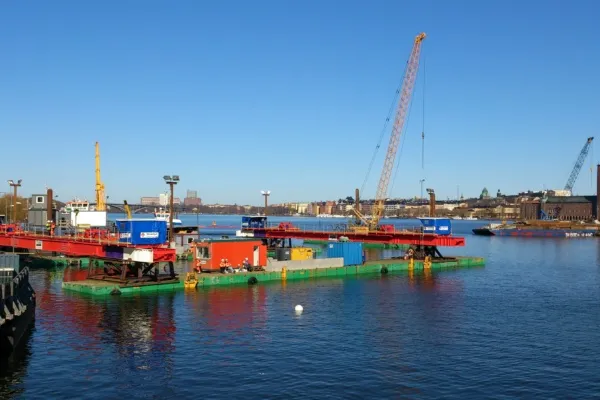
The Södertälje Lock is a vital part of Sweden’s maritime infrastructure. Since its last major renovation in 1924, both the number of vessel movements and the size of ships using the canal have increased significantly. To accommodate this growth and future-proof the waterway, a major expansion of the lock was required.
The project included:
- Extending the lock to approximately 170 metres
- Widening the lock to 25.3 metres
- Construction of two new lock heads
- Design and integration of new lock gates
- Construction of a new bascule bridge
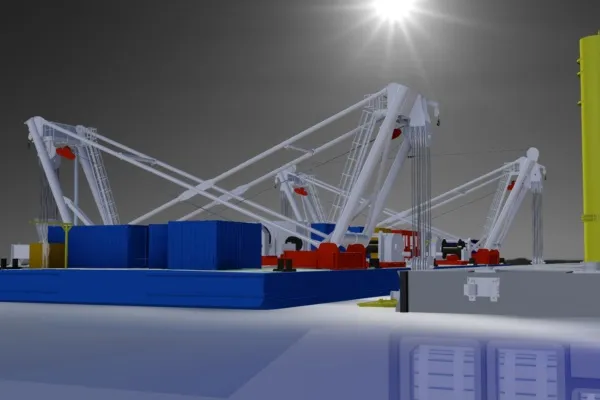
MH Poly and Iv-Infra were responsible for the entire engineering process, from concept design and structural calculations to construction methodology, planning and risk analysis.
Engineering Approach
The existing lock no longer met the requirements of modern shipping. Larger vessels and increased traffic volumes created capacity constraints and limited the efficiency of the waterway. At the same time, it was essential to modernise the lock without causing prolonged interruptions to maritime traffic.
One of the project’s greatest challenges was the requirement that the lock could be taken out of service for no more than one week. In addition, the construction work had to prevent damage to the surrounding historic monuments.
To meet these requirements, an innovative construction method was developed:
- The new lock heads were constructed in separate cofferdams adjacent to the existing lock.
- The complete structures were fully assembled, tested and prepared before installation.
- Once completed, the cofferdams were carefully flooded.
- The floating lock heads were towed to their final positions.
- Finally, they were accurately immersed and connected to the existing lock structure.
This innovative approach minimised disruption to navigation, significantly reduced construction time and lowered risks to the surrounding environment.